Improvements in diagnostics and individualized treatment can help keep this condition from being career-ending
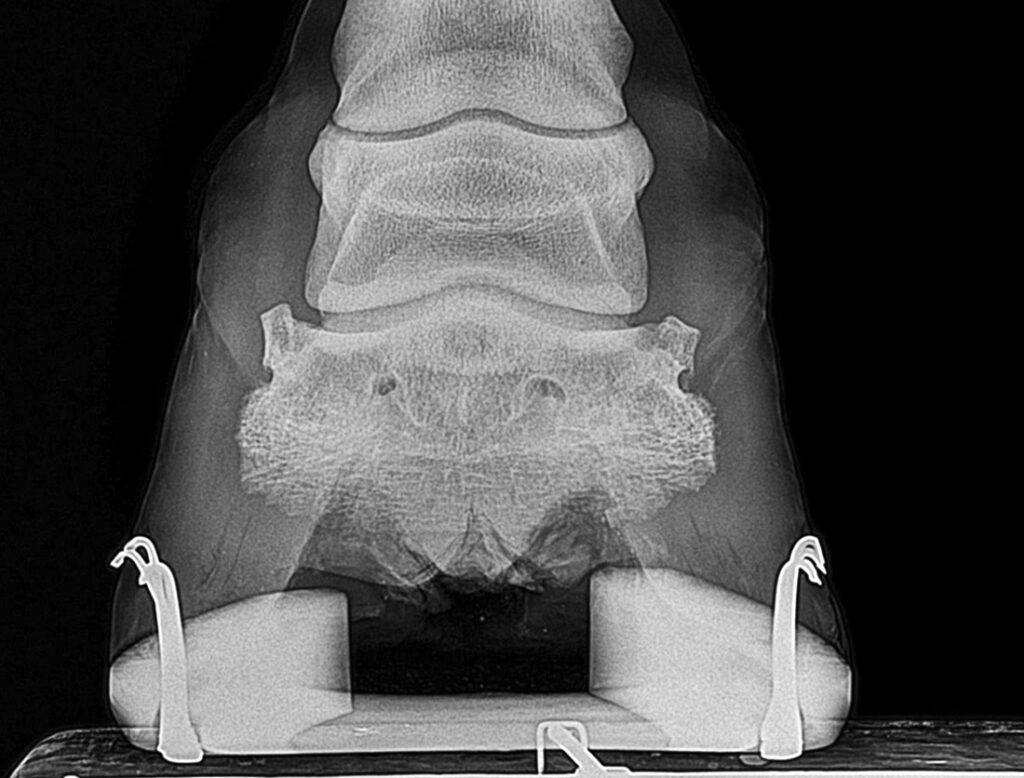
Podotrochlosis, commonly known as navicular disease, remains a challenging condition, but what was once a dreaded career-ending diagnosis can now be diagnosed and treated with improving success.
The biggest step forward in recent years involves a deeper understanding of navicular disease in horses. This outdated term lacks context without further clarification, says Ben Flakoll, DVM, an associate veterinarian and podiatry team member at Rood & Riddle Equine Hospital’s Saratoga, New York, location.
“When someone tells me their horse has navicular or was diagnosed with navicular syndrome, that tells me the horse probably had caudal (toward the rear) heel pain that resolved after a palmar (digital nerve) block,” he says, referring to injection of a local anesthetic over these nerves in the low pastern area of one limb. “The problem with this is that there are a lot of structures in the heel that can cause pain
This story requires a subscription to The Horse magazine.
Current magazine subscribers can click here to and continue reading.
Subscribe now and gain unlimited access to premium content.
Subscribe NowWe at The Horse work to provide you with the latest and most reliable news and information on equine health, care, management, and welfare through our magazine and TheHorse.com. Our explanatory journalism provides an understandable resource on important and sometimes complex health issues. Your subscription will help The Horse continue to offer this vital resource to horse owners of all breeds, disciplines, and experience levels.