Florida EHV-1: Another Farm Quarantine Lifted
Quarantine was lifted on a Wellington farm housing a horse that had shared HITS stabling with an EHV-1 case.

Quarantine was lifted on a Wellington farm housing a horse that had shared HITS stabling with an EHV-1 case.

A horse euthanized March 5 who was stabled at Santa Anita Park was confirmed positive for EHV-1.
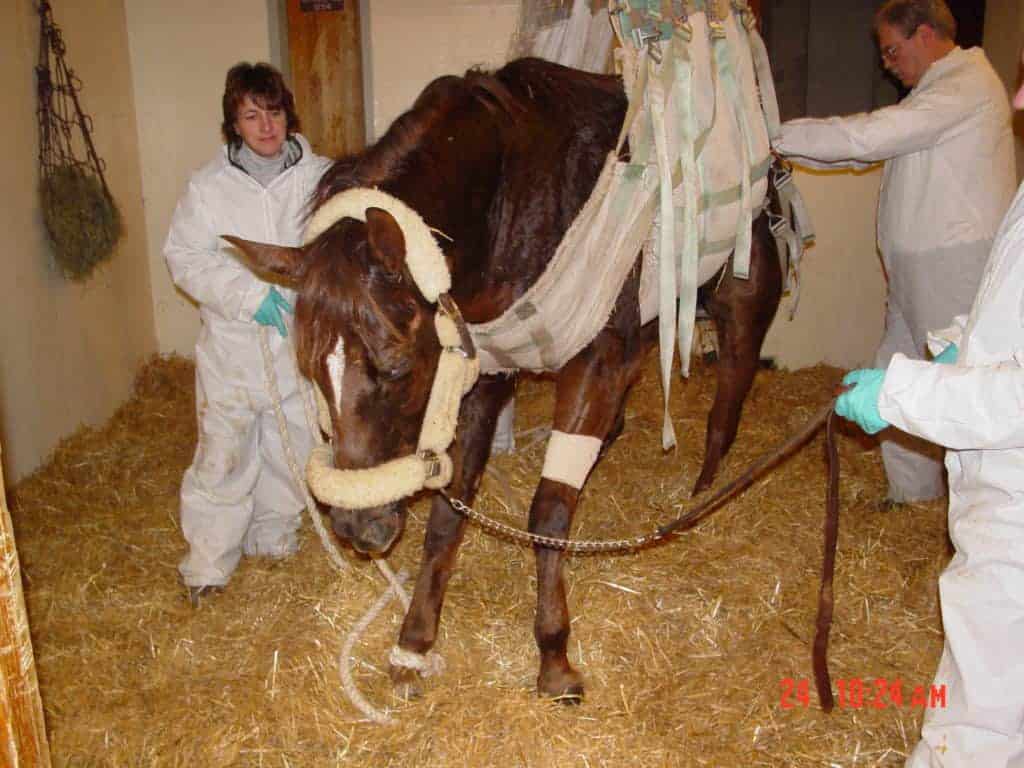
EHV-1 has been among the research priorities for some time, but there is still much to be learned.

One horse in Shelby County, Tennessee, has tested positive for the neurologic form of EHV-1.

Proper and timely intervention can mean the difference between a live foal and a lost one.

Illinois State Veterinarian Mark Ernst, DVM, confirmed March 6 that EHV-1 has been diagnosed in that state.
The Utah state veterinarian’s office has confirmed seven equine herpesvirus-1 (EHV-1) cases in Cache County.

Multiple horses exhibited clinical signs of influenza before testing positive for the disease.

Animal health officials are monitoring horses stabled at the HITS facility in Ocala, Fla., for signs of EHV-1.

The Utah state veterinarian’s office has now confirmed a total of six equine herpesvirus-1 (EHV-1) cases.

Udeni Balasuriya, BVSc, MS, PhD, will study genetic factors related to the EAV carrier state in stallions.
A quarantine on a Wellington horse farm due to EHV-1 has been released; the case count in Ocala holds steady.

Special Edition: We address current EHV-1 cases in North America and offer information to protect your horses.
The upcoming short courses will cover topics including stallion handling and equine behavior.
Veterinarians have confirmed an additional case of EHV-1 in connection with the HITS circuit in Ocala, Fla.
Two horses previously housed in FEI stabling at the PBIEC tested negative for EHV-1 Feb. 28.