Post-Surgery Prognosis in Horses
When a horse needs surgery, what’s his prognosis for a full recovery? What problems can occur during recovery?

When a horse needs surgery, what’s his prognosis for a full recovery? What problems can occur during recovery?
The Louisiana State University School of Veterinary Medicine is seeking donation of horses afflicted with equine recurrent uveitis (ERU)–also known as moon blindness–to participate in a study investigating the role of bacterial infection in the
The University of California, Davis, annual equine medicine symposium is scheduled for April 9. This year’s topic is “The Golden Years: Helping Your Horse Mature Gracefully,” and it will cover everything you ever wanted to know about helping your
A technology commonly used in human medicine would provide veterinarians with a quick, noninvasive alternative for diagnosing fungal keratitis in the equine eye, according to a researcher from Cornell University. Equine fungal keratitis is a common
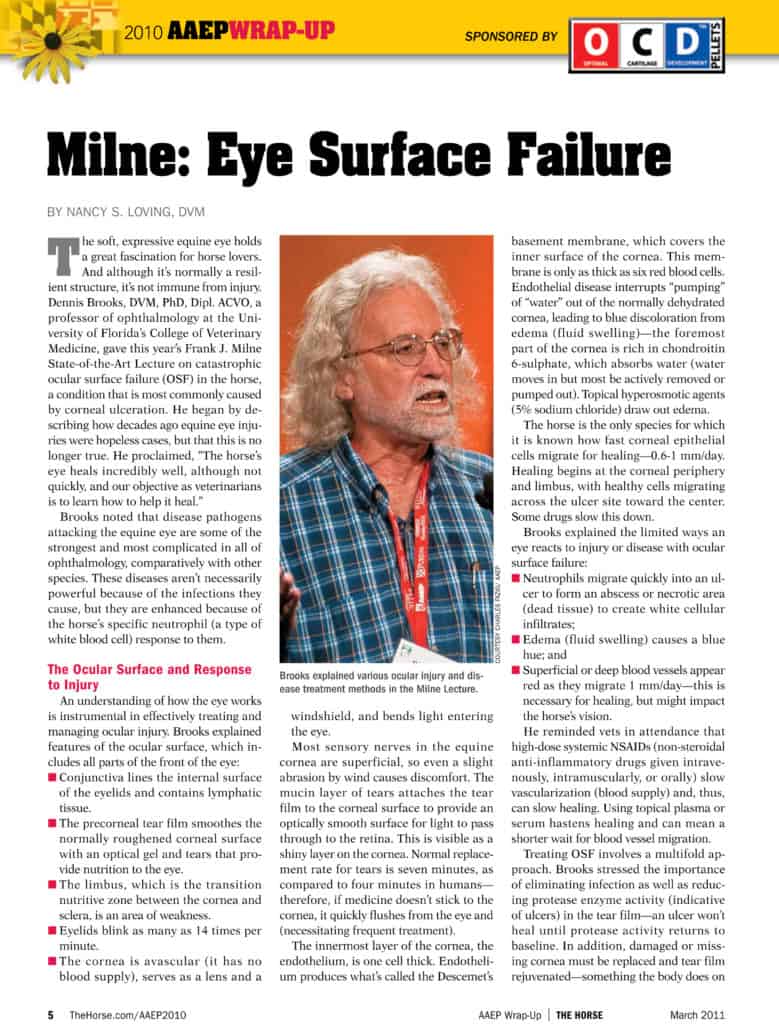
The soft, expressive equine eye holds a great fascination for horse lovers. And although it’s normally a resilient structure, it’s not immune from injury. Dr. Dennis Brooks gave the 2008 AAEP Convention’s Frank J. Milne State-of-the-Art Lecture on catastrophic ocular surface failure (OSF) in the horse.

Learn about many aspects of equine ophthalmology, including common horse eye problems such as ulcers and uveitis, along with medical and surgical treatments.
Update on what veterinarians and horse owners need to know about ocular (eye) surface failure (such as corneal ulcers) in horses, from Dr. Dennis Brooks of the University of Florida. (Presented at the 2010 American Association of Equine Practitioners convention, Milne State-of-the-Art Lecture)
Dr. Claire Latimer of the Rood and Riddle Equine Hospital discusses veterinary ophthalmology, signs of eye problems, and treatment strategies.
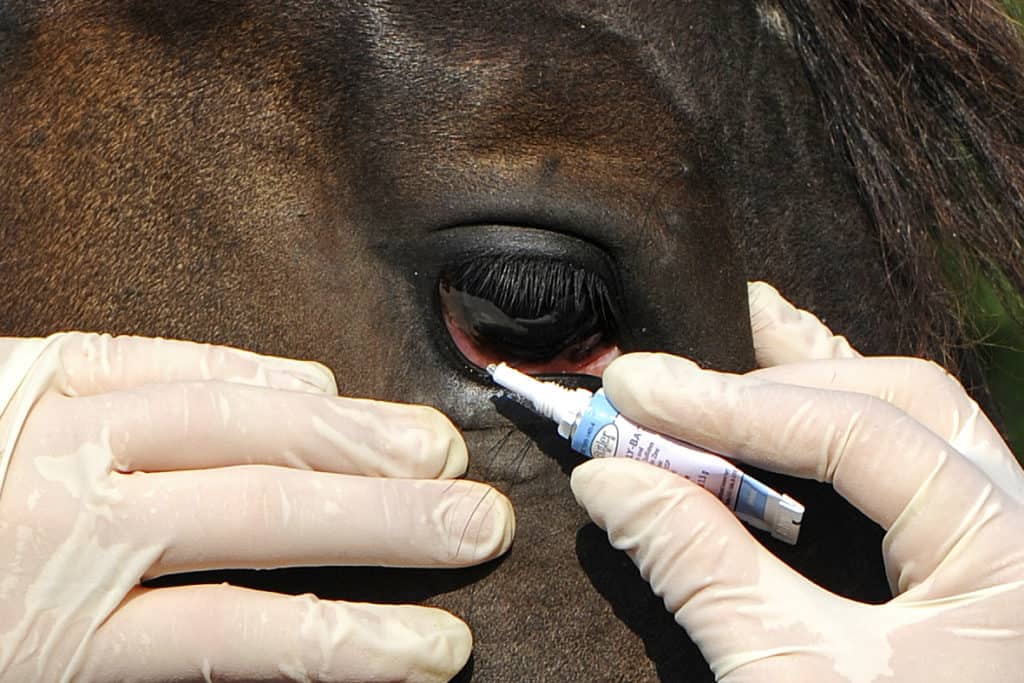
Dr. Claire Latimer discusses equine opthalmology and how to give eye medications to a horse.
Once you learn how the equine eye functions, you’ll better understand your horse’s actions. And you’ll have insight managing your trail horse when it becomes skittish for no apparent reason.
With their large, exposed eyes, horses are at risk for diseases of the cornea, the clear outer layer of the eye, said Elizabeth A. Giuliano, DVM, MS, Dipl. ACVO, associate professor of veterinary medicine and surgery at the University of Missou
New research from scientists in Liverpool has revealed the relationship between agility and vision in mammals. The study, published in February in the Journal of Anatomy, sampled 51 species to compare the relationship between agility and
Ophthalmology in horses was declared such an important topic at the 2009 American Association of Equine Practitioners (AAEP) Convention in early December that two Table Topics were held. In one session approximately 175 veterinarians attended,
A neighborly neigh is processed in a different way than other whinnies, meaning that horses have brain side preferences for sounds, according to a new study by French researchers.
In the past, Eastern Washington horse owners had to go to Spokane for advanced eye care, or over to Western Washington near Seattle. Now horses with difficult eye problems can come to WSU’s Veterinary Teaching Hospital in Pullman for treatment.
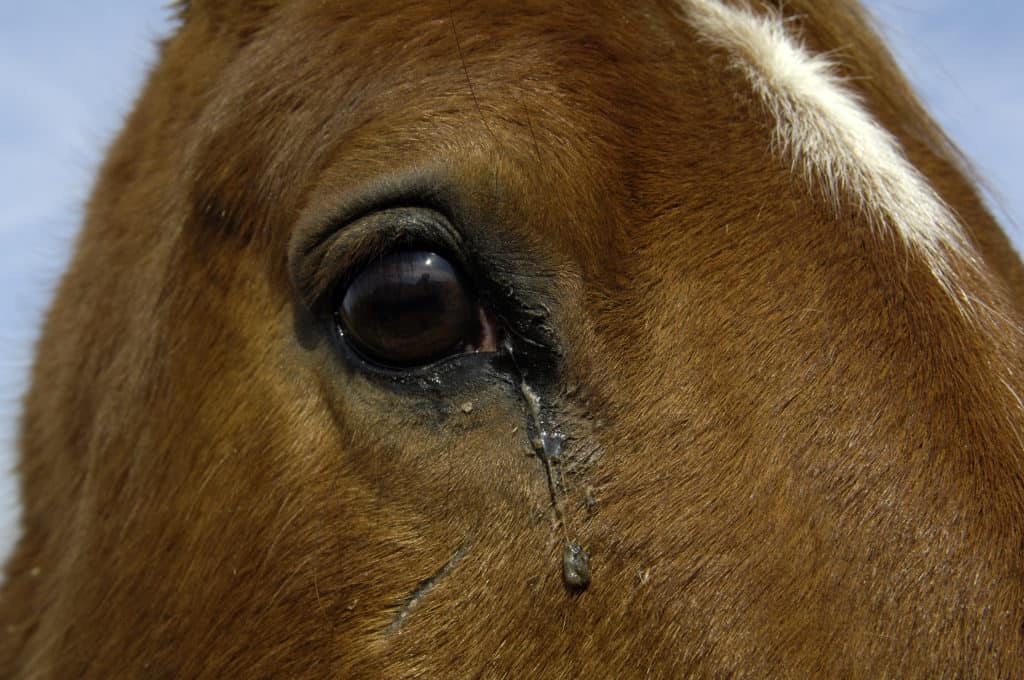
While there are many reasons for a horse to have excessive tear production, it’s a classic sign of equine recurrent uveitis, also known as moon blindness.