Slobbers in Horses
Slobbers often results from horses ingesting a compound (slaframine) produced by a fungus on legumes such as clover.

Slobbers often results from horses ingesting a compound (slaframine) produced by a fungus on legumes such as clover.

Officials say a horse in Boulder County has been diagnosed with West Nile Virus (WNV).

A south Texas horse tested positive for WNV while the EEE cases were found in the eastern part of the state.

Testing confirmed that a horse residing in the Atherton Tablelands died from the virus earlier this week.

The economic impacts of 2014 vesicular stomatitis outbreak were felt within the equine industry at multiple levels.
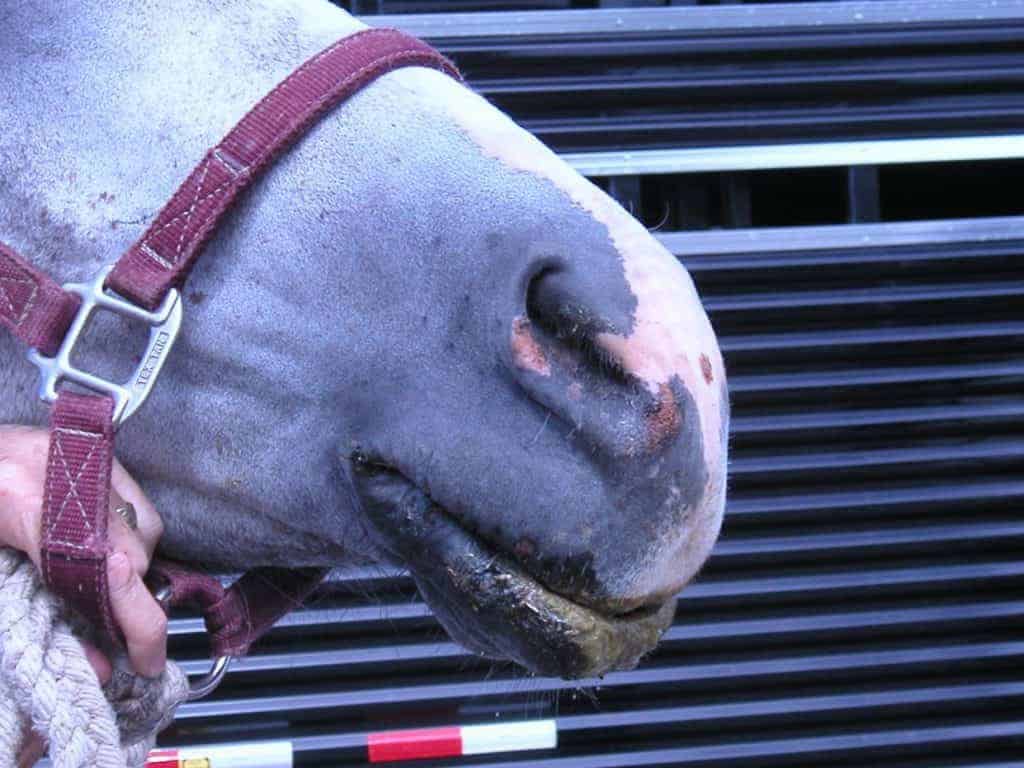
Facilities in Delta, La Plata, Larimer, Las Animas, Montezuma, and Montrose counties are under quarantine.

Staff at the UK Veterinary Diagnostic Laboratory has seen a recent trend in positive results for Potomac horse fever.

Tyzzer’s disease primarily affects foals’ livers, causing necrotizing hepatitis (liver disease).

The unvaccinated 5-year-old Quarter Horse gelding from Kennewick is recovering.

There’s still time to take steps to protect your horse from these two potentially deadly mosquito-borne diseases.
Reported diseases include equine herpesvirus, strangles, equine viral arteritis, contagious equine metritis, and more

This neurologic condition can prove deadly for some horses, but others recover with treatment. Here’s what to remember.

The plant was introduced into Florida in 1925 as a potential forage source but was found to be toxic to horses.

An unvaccinated horse from Barnwell County died after contracting the mosquito-borne disease.

As of July 15, 19 premises in four counties are quarantined after horses, mules, and one cattle herd tested positive.
An 8-year-old Quarter Horse from Cumberland County died despite veterinary treatment.