Broodmares: Worth Their Weight
Find out what effect a mare’s weight and, ultimately, energy or calorie intake can have on her efficiency as a broodmare and on her foal.
How to care for the basic health needs of horses

Find out what effect a mare’s weight and, ultimately, energy or calorie intake can have on her efficiency as a broodmare and on her foal.

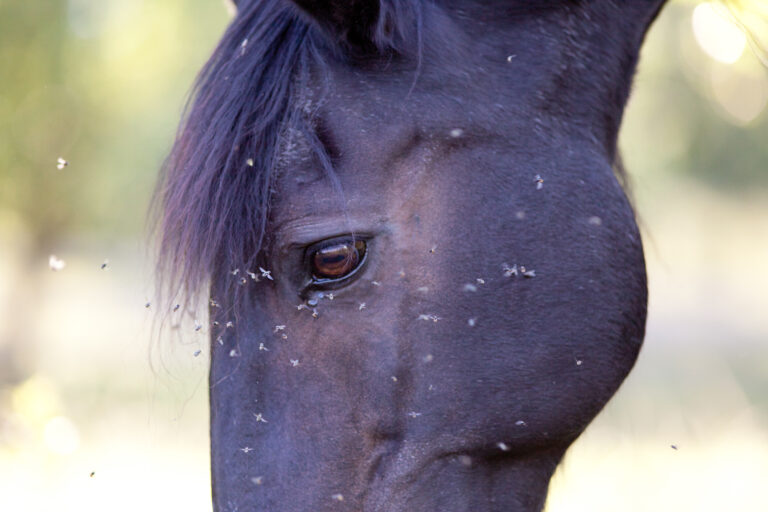
We all know horses use their tails to ward off flying insects. But the mechanics behind that effective tail swatting is intriguing scientists, and it could lead to tail-inspired bug repellent technology.

When veterinarians applied a compression bandage to the horse’s pastern before administering a palmar digital nerve block, the drugs remained localized to the hoof rather than spreading further up into the leg.

With proper care, senior horses can prosper. Here are a few points to consider.

This move comes as a result of the FDA’s work with veterinary parasitology experts and the animal health community to find ways to maintain these drugs’ effectiveness in the face of antiparasitic resistance.

Researchers know horse body weight, BCS, and body fat percentage appear to be correlated with blood concentrations of PGE2—a joint damage marker.

Fats serve many important functions for horses, from increasing calorie consumption to reducing gastric ulcer severity.

Read the latest in equine health research, news, and information presented at the 2018 British Equine Veterinary Congress in Birmingham, England.

When a horse shows signs of poor performance, rearing or bucking under saddle, and sensitivity when grooming, an owner might conclude that he has a sore back. But when is an issue truly back pain, and when is it secondary to another orthopedic issue? One veterinarian weighs in.

From hydration to irrigation, learn how to combat challenges that come with caring for horses in arid climates.

In addition, researchers identified criteria that helps clearly distinguish a horse in pain from one that’s not in pain.

Top tweets from the AAEP President’s luncheon and Tuesday’s educational sessions.

A barn was released from an EHV-1 quarantine, but is the risk for disease transmission gone? A veterinarian weighs in.

Researchers found that treating suspensory ligament branch tears surgically generally yielded a good prognosis and proved superior to noninvasive management. However, they cautioned, surgical intervention is lesion-specific and not applicable to all suspensory branch injuries.

Diagnosing SI injuries in horses remains challenging. One veterinarian recommends practitioners rule out other causes of pain when making a diagnosis and take a systemic approach using all available modalities.

Carolyn Arnold, DVM, Dipl. ACVS, of Texas A&M University offers a better understanding of the gut microbiome’s role in colic and colitis.
Stay on top of the most recent Horse Health news with
"*" indicates required fields