Trace Mineral Basics: Magnesium
Magnesium, an important macromineral found in most feedstuffs, plays integral roles in muscle contraction, skeletal growth, and a variety of enzyme systems, such as those involved in energy production.

Magnesium, an important macromineral found in most feedstuffs, plays integral roles in muscle contraction, skeletal growth, and a variety of enzyme systems, such as those involved in energy production.

Does your herd leader get too much to eat while the low man doesn’t get enough? Here’s our expert’s advice.

Hay can become a significant fuel source for fires or even cause a fire through spontaneous combustion. Learn how to best store your hay from Alayne Blickle of Horses for Clean Water and Dr. Rebecca Gimenez of Technical Large Animal Emergency Rescue.

Although poison hemlock is often seen along roadways and in other nonagricultural sites, in recent years it has expanded into grazed pasture lands and hay fields. Here’s how to keep your horses and other livestock safe.


As an essential trace element for horses, chromium plays roles in the communication between insulin and insulin receptors, lipid metabolism, and immune function.

Overgrazing, one of the most common threats to pasture and plant health, happens all too often on horse farms. Download this free report to learn about the signs and solutions to overgrazed pastures.

Does your performance horse need to pack on a few more pounds? Here are some tips to consider when managing a hard-keeping equine athlete.

Nutritionist Dr. Clair Thunes explains why ration-balancer protein contents might seem high but aren’t.

Learn more about these trace minerals that are vital to horse health.

Although owners are frequently warned against the consequences of feeding these carbs, horses need them in their diets.

Learn about vitamin B-12’s role in the horse’s body and when supplementation might prove beneficial.

Monitor and optimize your horse’s training, diet, health, and shipping experience in order to help him perform his best.

Health problems can arise when animals—including horses—and people come into contact with the various toxins produced by blue-green algae.

My filly is licking and biting her salt block obsessively. Is it possible for her to eat too much salt?
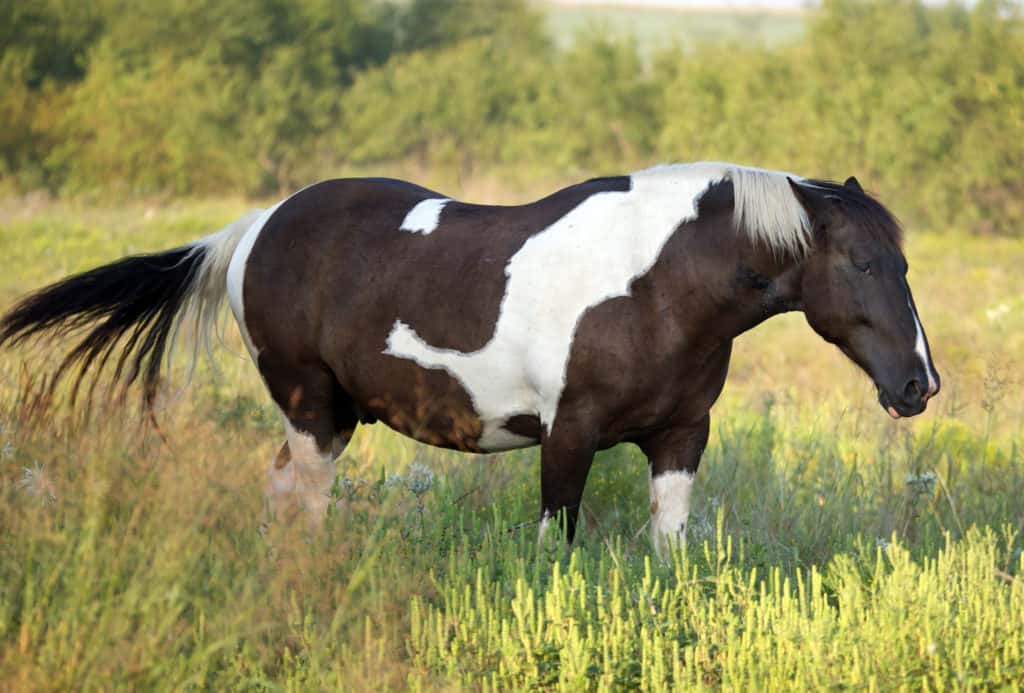
Researchers found a significant difference in how they body condition scored horses compared to the animals’ owners, who tended to underestimate body condition.