Steaming vs. Soaking to Reduce Hay NSC Levels
Our nutritionist weighs whether steaming or soaking hay is more effective at reducing NSC levels for horses with insulin resistance.

Our nutritionist weighs whether steaming or soaking hay is more effective at reducing NSC levels for horses with insulin resistance.

A mature horse that is idle or lightly exercised requires 100 mg of copper per day. Here’s why.

Good pasture management begins with maintaining soil fertility to promote the growth of desirable grasses.

Here are a few ways to make feeding time more efficient without sacrificing your horse’s dietary balance.

Activated charcoal administered via a nasogastric tube might help stop the intoxication process that leads to death.

The domains focus on horses’ nutrition, environment, health, behavior, and mental experiences.

Learn how to make sure your horse has a clean, safe drink of water when he needs it, with Dr. Roberta Dwyer of the University of Kentucky’s Gluck Equine Research Center.

While scales are most accurate, they’re not always accessible. Here are some other weight estimation techniques to try.

Dehydration, fitness, and breeding can lead to specific challenges when treating colicky horses during endurance rides.

The conference focuses on teaching ways to maximize alfalfa production and utilization.
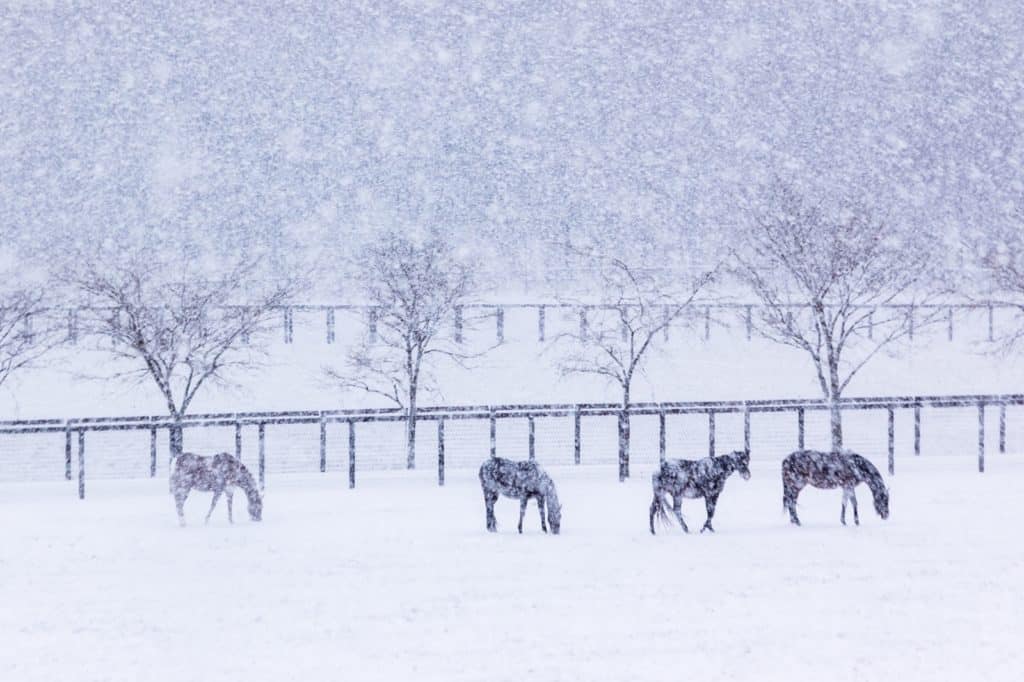
Ensure horses and livestock have adequate shelter, water, dry bedding, and feed to make it through the cold spell.

Zinc-deficient horses can exhibit reduced growth rates, inappetence, and skin abnormalities, among other issues.

Foals with a selenium deficiency are at risk of developing white muscle disease, which leads to skeletal and cardiac muscle abnormalities.

Of the 838 respondents, 290 (35%) said they keep thawed water available to their horses in a stock tank or trough with a heating element.

On average it took horses about 30% longer to eat from both slow feeders compared to the ground, researchers found.

Extreme winter weather conditions can make horse care and barn chores challenging. Stay warm with these tips.