Exercise Therapy for Horses
Controlled exercise, as discussed with your veterinarian, can be part of a successful rehabilitation program.

Controlled exercise, as discussed with your veterinarian, can be part of a successful rehabilitation program.

Learn about preventing and managing equine osteoarthritis in our visual guide.

Equine hydrotherapy generally allows for patient-specific approaches to rehabilitation and training.

Researchers are redefining the muscular diseases long called “tying-up.” While they seem similar, the causes are different, and each requires specific management.
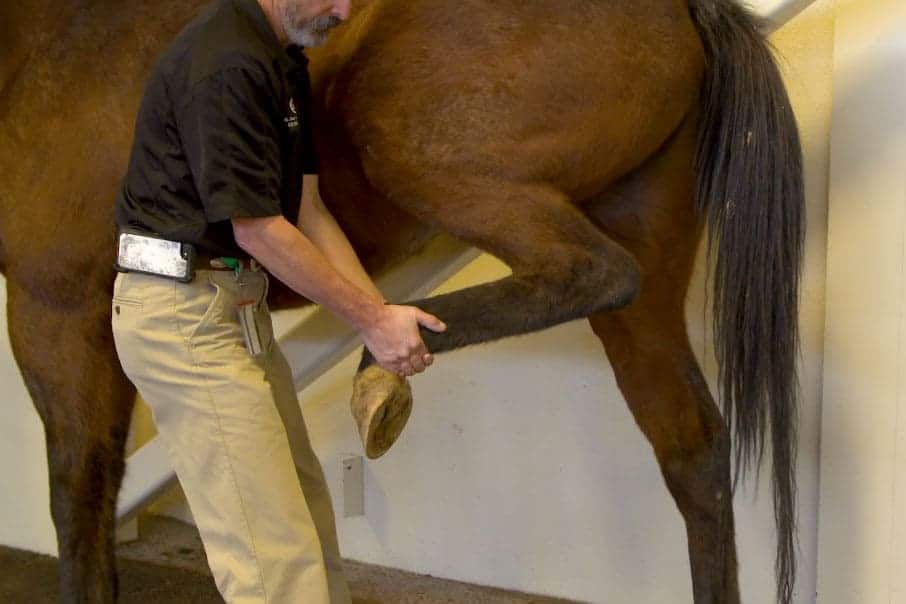
A veterinarian evaluates a horse’s soundness using flexion tests.

Horses with gastric ulcers might appear thin and not perform as well as they used to. But many others never show any outward signs.

Top articles about keeping horses’ joints healthy so they can do their job comfortably. Sponsored by Bimeda.

Osteoarthritis in horses’ hocks can lead to joint fusion. For some affected horses, this might be a good thing. Find out why.

Bonny Henderson, DVM, CERP, describes how extracorporeal shock wave therapy (ESWT) works to treat and even prevent injuries.

Three top sports medicine veterinarians say the best way to stay competitive is by developing a proactive approach to managing every aspect of your horse’s health and soundness.

Body and leg wounds treated promptly with MSCs originating in the mouth heal better than untreated wounds.

Here’s what to know about horse inspections, which are designed to evaluate the horse’s fitness to compete.

Reduce sporadic episodes of exertional rhabdomyolysis by providing plenty of forage and meeting these unique equine athletes’ nutrient requirements.

The most common horse vertebral issues seen over a decade at one diagnostic lab were wobbler syndrome, fracture/subluxation, and abnormal spinal curvature.

Researchers injected horses’ injured joints with a combination of hyaluronan, sodium chondroitin sulfate, and N-acetyl-d-glucosamine (HCSG).

A Washington State University survey found about 27% of U.S. horse owners obtain pain killers from noncompliant sources.