10 Navicular Syndrome Resources on TheHorse.com
Learn about veterinarians’ current understanding of navicular syndrome with these articles, downloads, videos, and more. Sponsored by Dechra Veterinary Products.

Learn about veterinarians’ current understanding of navicular syndrome with these articles, downloads, videos, and more. Sponsored by Dechra Veterinary Products.

Recognizing and treating club feet in young horses can help them succeed in their intended discipline and, ultimately, prevent lifelong hoof complications.

Anecdotally, we know that hoof anatomy influences horse soundness and movement, but researchers are working to put science behind that relationship. Here’s what they’ve learned so far.
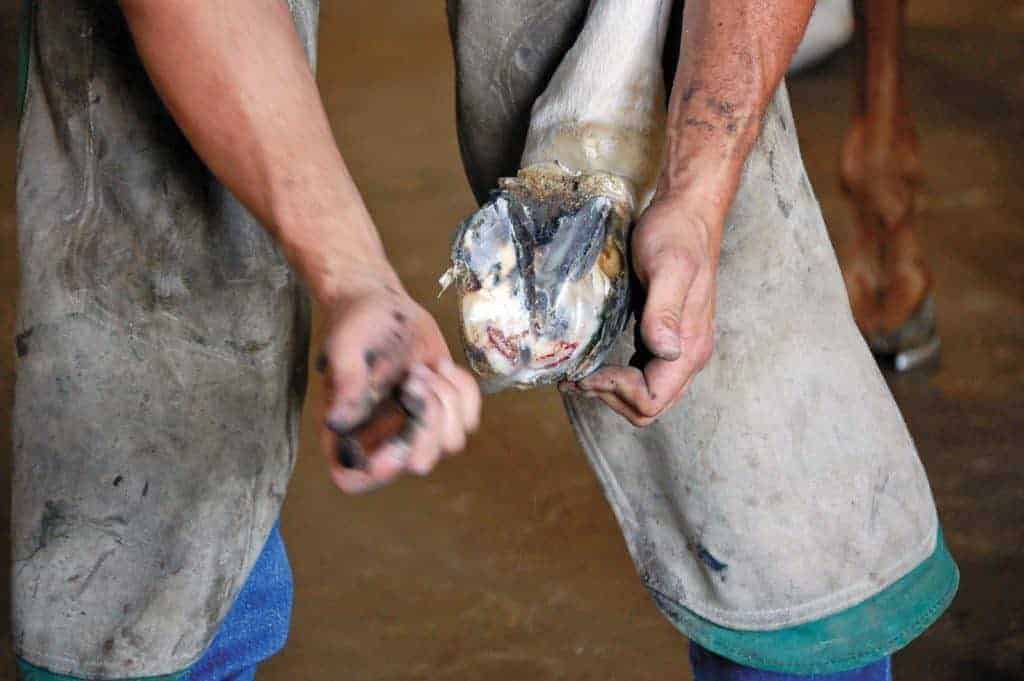
Equine Soundness Professionals’ first educational event will take place March 16, in Wellington, Florida, and feature presentations about a variety of hoof-related topics.

A systematic approach to examining the equine foot can help veterinarians identify causes of lameness more quickly and accurately.

An analgesic buffered with sodium bicarbonate alleviated lameness quicker and for a longer duration than an unbuffered one, researchers found.

Horses treated with lidocaine and epinephrine remained sound for longer and had decreased skin sensation compared to those that were blocked with lidocaine alone.

Is your horse’s clumsiness a simple matter of long toes and uneven ground, or is a career-limiting condition to blame?

Attention to certain details during exams and careful consideration of test results can help a veterinarian arrive at a diagnosis, making way for an appropriate management.
Determining why a horse isn’t performing up to expectations can be a time-consuming and tedious process. One veterinarian shares how she approaches these cases.

Dr. Wes Sutter recaps studies on MRI for diagnosing hock problems, tieback surgery, evaluating suspensory ligament branch injuries, nerve blocks, and more.

Researchers recently identified a link between hind-limb lameness and coffin bone angles, which they said has not been previously described in horses.
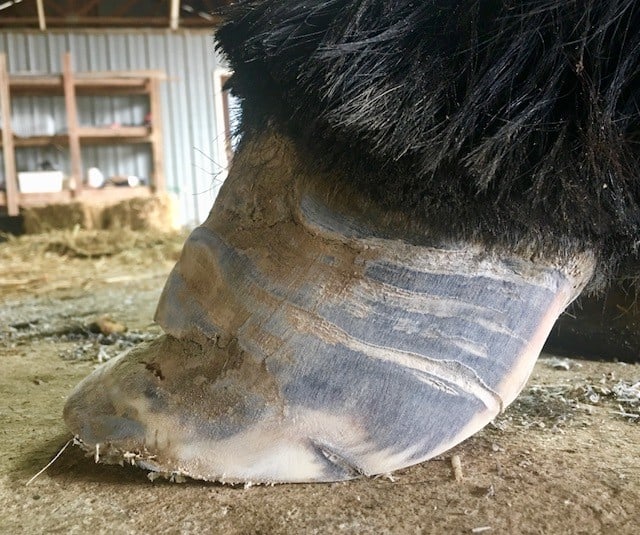
Also known as “buttress foot,” this condition primarily affects horses with poor leg conformation in high-impact disciplines. A veterinary podiatry expert explains.

Researchers found no apparent link between previous surgery and catastrophic injury, but they did identify associations with medication use and lameness.

What kind of physical damage can be done when a horse pulls back violently? A sports medicine practitioner weighs in.

Horse gait analysis is getting more advanced: A recently developed and tested comprehensive motion sensor system can simultaneously record and analyze data remotely from eight parts of a moving horse body, researchers say.