What Kind of Grain and How Much Should I Feed My Horse?
Dr. Clair Thunes defines the differences between grains, concentrates, and complete feeds for horses and explains how much a horse needs.

Dr. Clair Thunes defines the differences between grains, concentrates, and complete feeds for horses and explains how much a horse needs.

Do all the supplements, concentrates, and forages on the market have you confused about what’s best to feed your horse? Learn what your horse really needs to eat from equine nutritionist and consultant, Dr. Clair Thunes.

When feeding horses in groups, increasing their distance apart and time spent eating might help reduce aggression.
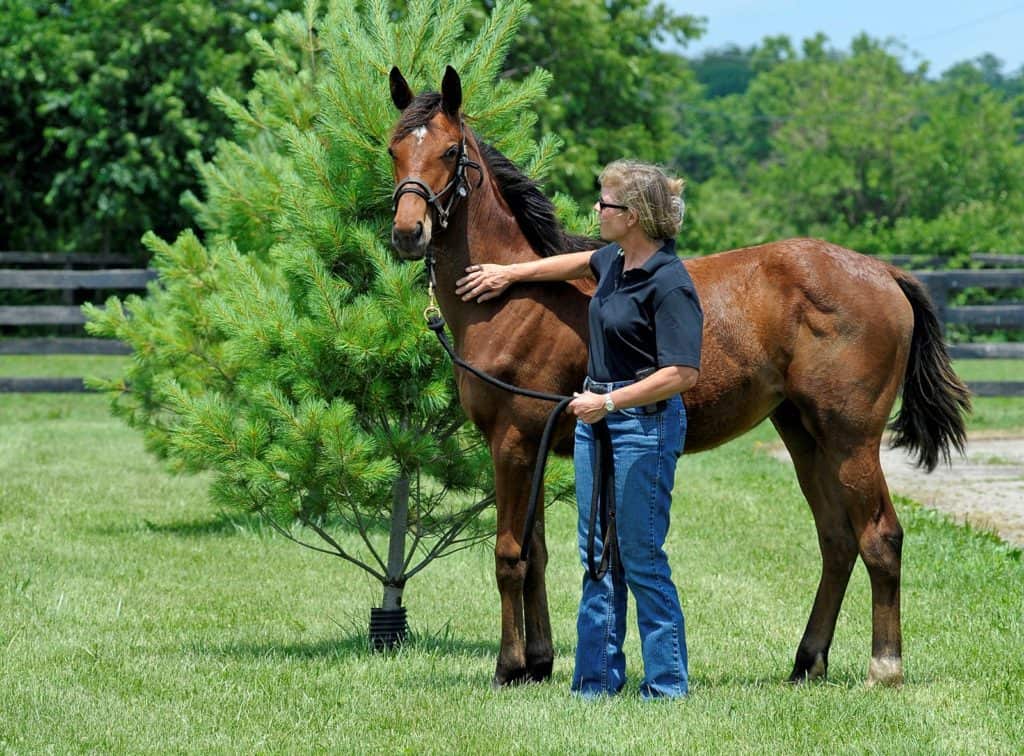
An equine behaviorist offers advice for managing an orphaned filly who exhibits dangerous behaviors.

Researchers implanted embryos from ponies, saddle horses, and draft horses into surrogate mares of different sizes and observed significant differences in weight, height, and metabolic markers among the resulting genetic half-siblings

Protect your foal from three important causes of young horse illness: Rhodococcus equi, equine proliferative enteropathy, and adrenal insufficiency.

Dr. Earl Gaughan addresses rapid growth in young horses and the related potential for joint issues such as OCD. This podcast is from the Equine Life Stages: Young Horses Q&A audio event.
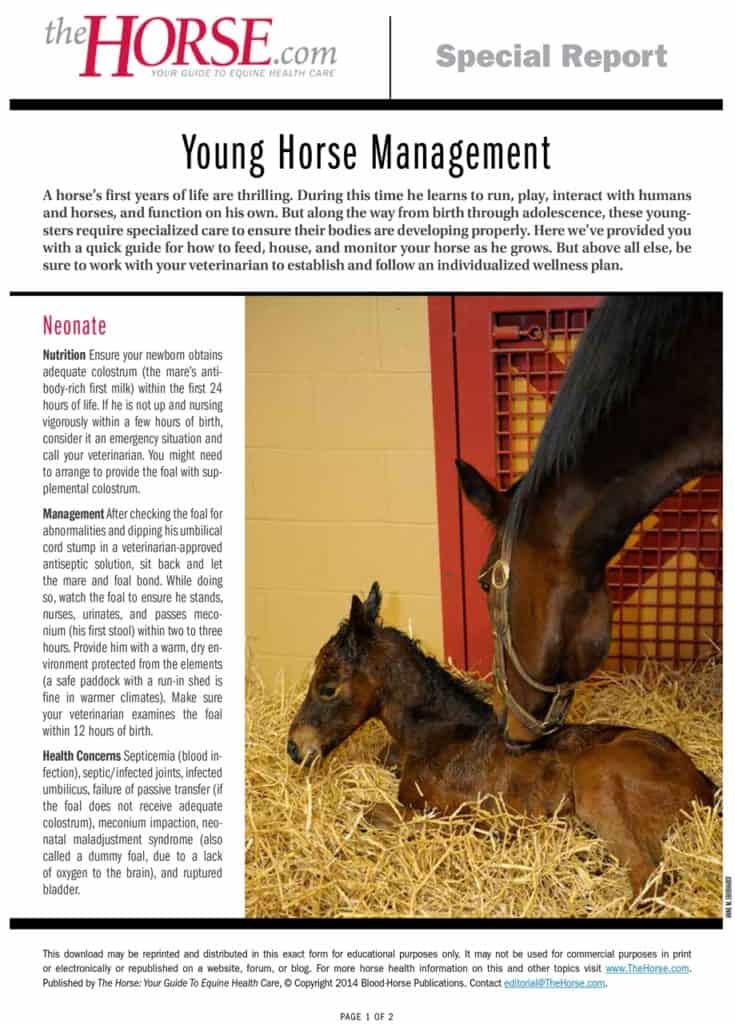
Use this cheat sheet to make sure your young horse–neonate to yearling–is getting the care she needs.

Are you confused about equine nutrition? Learn how to feed your horse in our step-by-step visual guide.

Marcarena Sanz, DVM, MS, Dipl. ACVIM, of the University of Kentucky’s Gluck Equine Research Center shares information about R. equi, a serious pneumonia-causing respiratory disease in foals up to 6 months old.

To a newborn foal, colostrum can mean the difference between life and death.
Should a foal be dewormed during its first 6 months of life? Dr. Wendy Vaala responds. This podcast is from the Equine Life Stages: Foals Q&A audio event.

The most common way adult horses contract the disease is by eating feed, such as hay or grain, that contains animal remains.
What impact can a mare going through her “foal heat” have on her foal? Dr. Wendy Vaala responds. This podcast is from the Equine Life Stages: Foals Q&A audio event.
Do foals, especially those born early in the season or in cold climates, need to wear blankets? Dr. Wendy Vaala responds. This podcast is from the Equine Life Stages: Foals Q&A audio event.
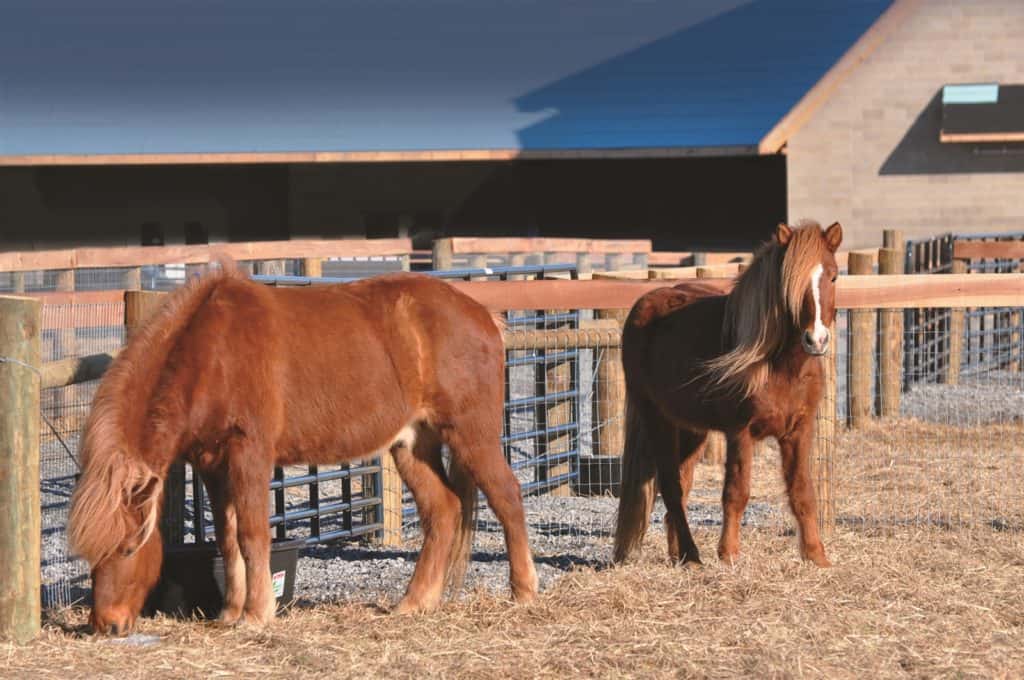
Consider your property’s equine traffic, geographic location, and parasite control goals to create an effective program.