Gastric Ulcers in Horses: Risk Factors and Management Tactics
There are 2 forms of equine gastric ulcer syndrome. A researcher describes how to prevent them.

There are 2 forms of equine gastric ulcer syndrome. A researcher describes how to prevent them.

Researchers studied the effects of transitioning horses from pasture life to a training program on their risk of developing ulcers.

A once-heavy senior horse is struggling to hold condition after dental work. Our nutritionist weighs in.

Discover how each region of your horse’s digestive system works in this visual guide.

Born to forage all day, horses constantly secrete stomach acid. Acid-buffers can help meal-fed horses, but will they create future problems? Find out from our equine nutrition expert.

Equine digestion is full of twists and turns, and a lot can go wrong during the process. Learn how colic, diarrhea, ulcers, and other ailments can affect your horse’s GI tract and what steps to take to optimize his digestive health.

How often should you feed your horses each day? Our nutrition expert weighs in with advice.

Horses with gastric ulcers might appear thin and not perform as well as they used to. But many others never show any outward signs.

Researchers found high concentrations of Sarcina, a bacterium associated with poor gastric emptying, in horses’ glandular lesions.

Prior to the lifting of an omeprazole ban in 2016, researchers found that all racehorses in a small study had both glandular and squamous ulcers.

A veterinarian addresses whether oral aloe vera could help horses with gastric ulcers and offers evidence-based alternatives.
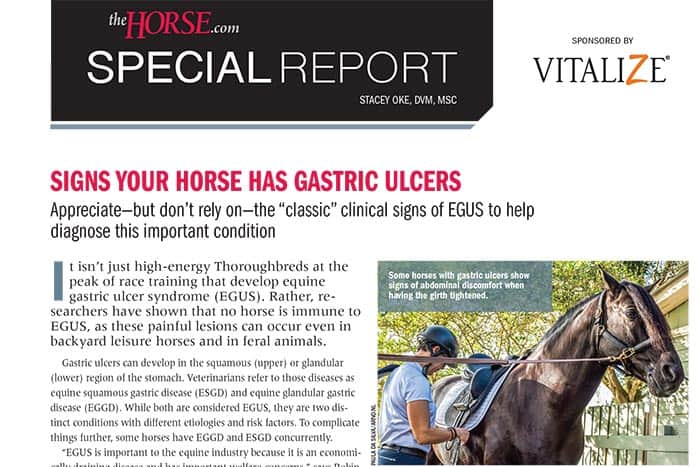
Many horses diagnosed with equine gastric ulcer syndrome via gastroscopy have no clinical signs, or the signs are so subtle owners fail to recognize them. Sponsored by Vitalize.

Three top sports medicine veterinarians say the best way to stay competitive is by developing a proactive approach to managing every aspect of your horse’s health and soundness.

In the face of gastric ulcer risk factors, omeprazole protected horses’ stomach lining better than sucralfate alone.
Consider these nutritional factors when formulating your horse’s diet to avoid GI issues such as equine squamous gastric disease.

Dr. Alicia Long describes behavioral signs a horse with gastric ulcers might exhibit.