WNV Confirmed in Kentucky Horse
A horse in Taylor County, just east of Louisville, Ky., has been diagnosed and treated for West Nile virus (WNV), according to officials at the Kentucky State Veterinarian’s Office.

A horse in Taylor County, just east of Louisville, Ky., has been diagnosed and treated for West Nile virus (WNV), according to officials at the Kentucky State Veterinarian’s Office.

Four veterinarians discuss equine protozoal myeloencephalitis (EPM) diagnosis, what conditions it can appear to be, and effective treatment.

Lawsonia intracellularis bacteria can cause intestinal disease in horses, pigs, and other species worldwide. The syndrome in horses is often called equine proliferative enteropathy, or EPE.
The crooked little bacterium that causes Lyme disease is causing quite a stir in the equine community.
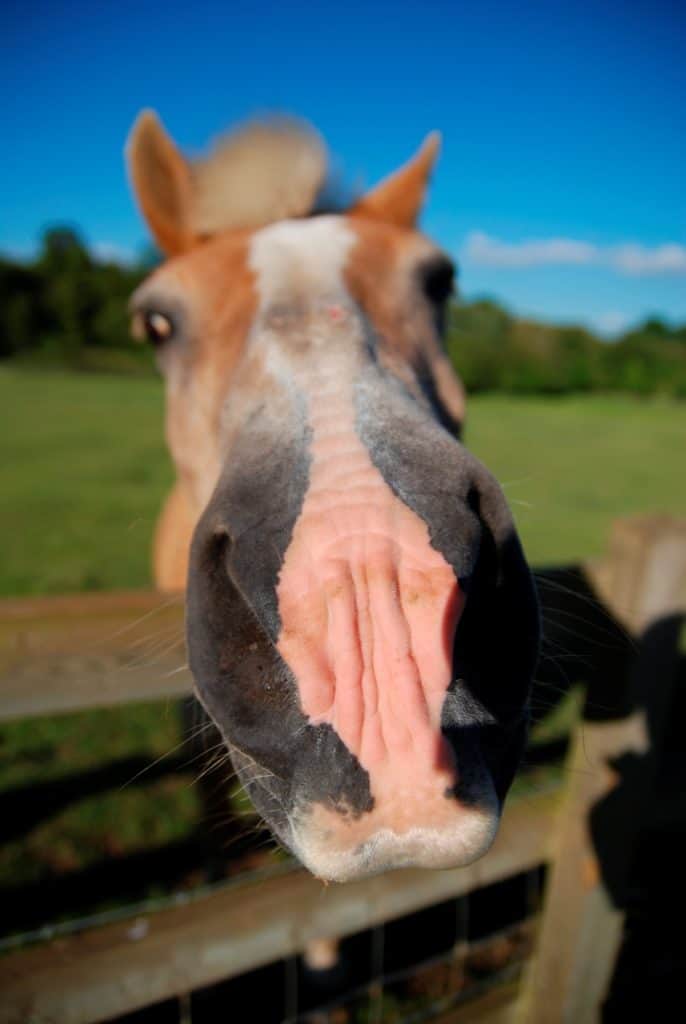
Like humans, horses are susceptible to sunburn, especially on the non-pigmented pink-skinned areas of the body. Sunburn is most frequently seen around the eyes and on the muzzle of pale or white-faced horses.
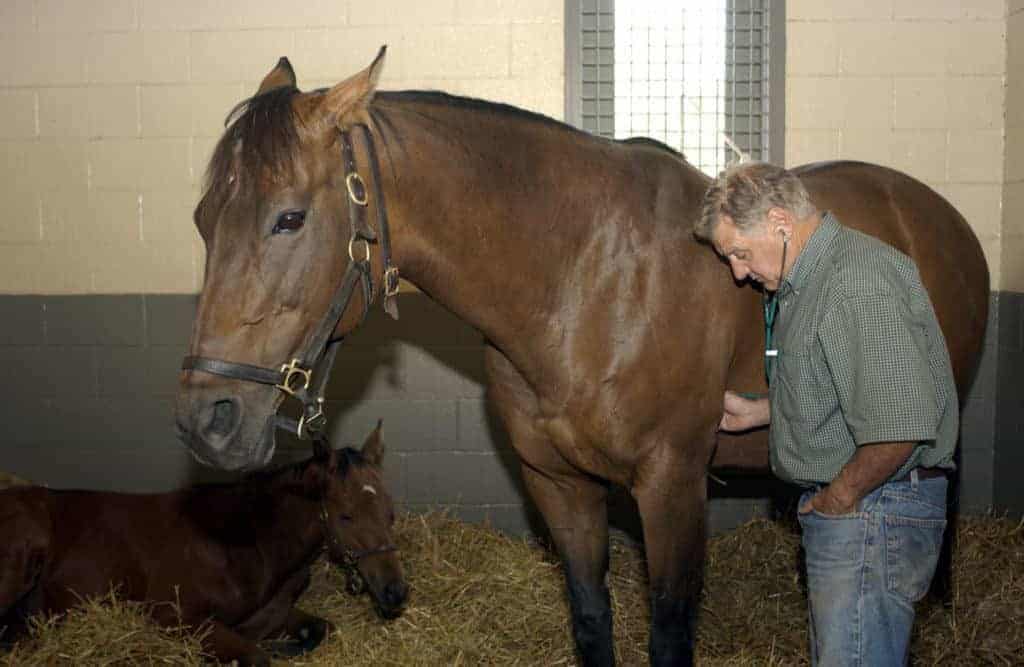
Knowing how to identify abnormalities in your horse’s heart rate and rhythm will help you and your veterinarian treat him or her when illness strikes.
Unlike heart and respiratory rates, abdominal sounds do not punch a specific time clock for generating “gut sounds.” The rhythmic peristaltic churning of food mixed with fluids within the gut varies in slower waves depending on meal time, the meal itself, and the level of activity. You don’t actually “time” bowel sounds, but you do want to know if they are present.
Diagnostic assays for equine protozoal myeloencephalitis (EPM) developed under the leadership of Daniel Howe, PhD, a molecular parasitologist at the University of Kentucky Gluck Equine Research Center, are now available exclusively at Equine Diagnostic Solutions LLC (EDS).
The wet spring weather and abundant clover growth in Central Kentucky has made 2010 a bumper year for slaframine toxin, or “slobber toxin.”

Equine Insulin Resistance is a reduction in sensitivity to insulin that decreases the ability of glucose to be transported into the body’s cells from the bloodstream.
The University of Kentucky’s Gluck Equine Research Center needs Lexington-area Thoroughbred farms to participate in a study to determine Thoroughbred weanlings’ seroprevalence (presence of positive serum antibodies) to Lawsonia intracellularis, the causative agent of equine proliferative enteropathy (EPE).

Red maple trees are beautiful trees that grow extensively throughout eastern North America. However, horse owners should be aware these trees can pose a serious risk to horses.
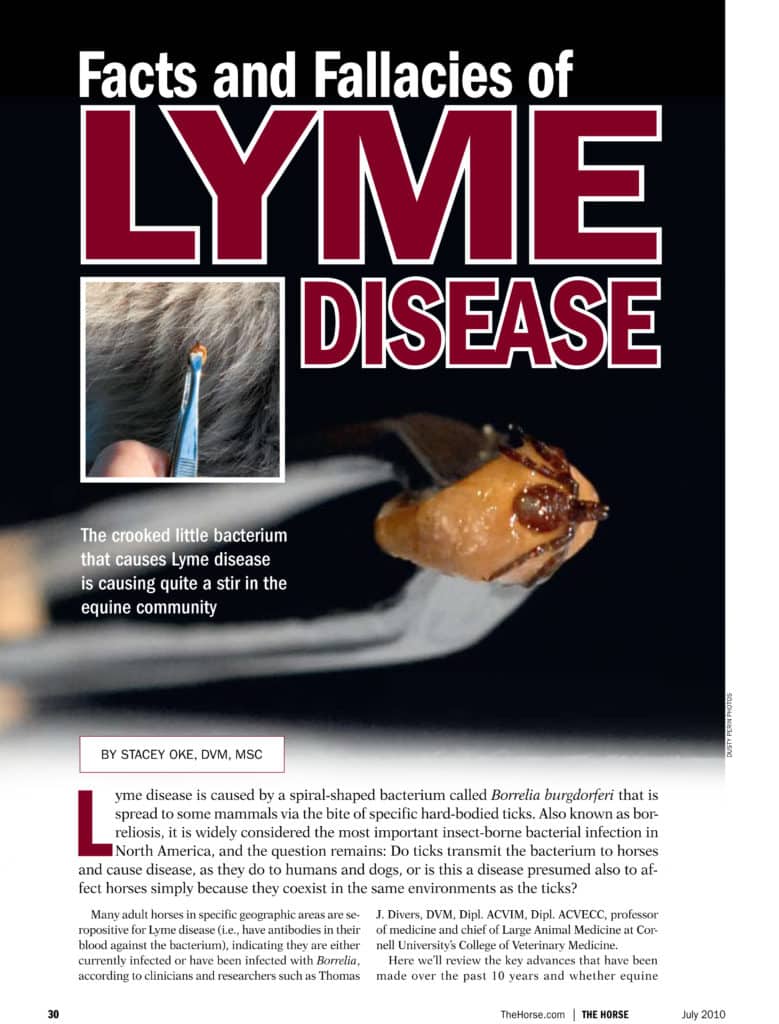
Lyme disease is caused by a spiral-shaped bacterium called Borrelia burgdorferi that is spread to some mammals via the bite of specific hard-bodied ticks. Also known as borreliosis, it is widely considered the most important insect-borne bacterial infection in North America. But it is unknown whether ticks transmit the bacterium to horses and cause disease or because the two coexist.
We’ve all heard the statistics about an aging America. The elderly represent the fastest growing-proportion of the U.S. population. In recent years horses have experienced a similar population shift.
A large portion of the equine population (about 15%) is composed of horses older than 20 and, even at this age, many remain actively involved in equestrian sports, reproduction, or as companion
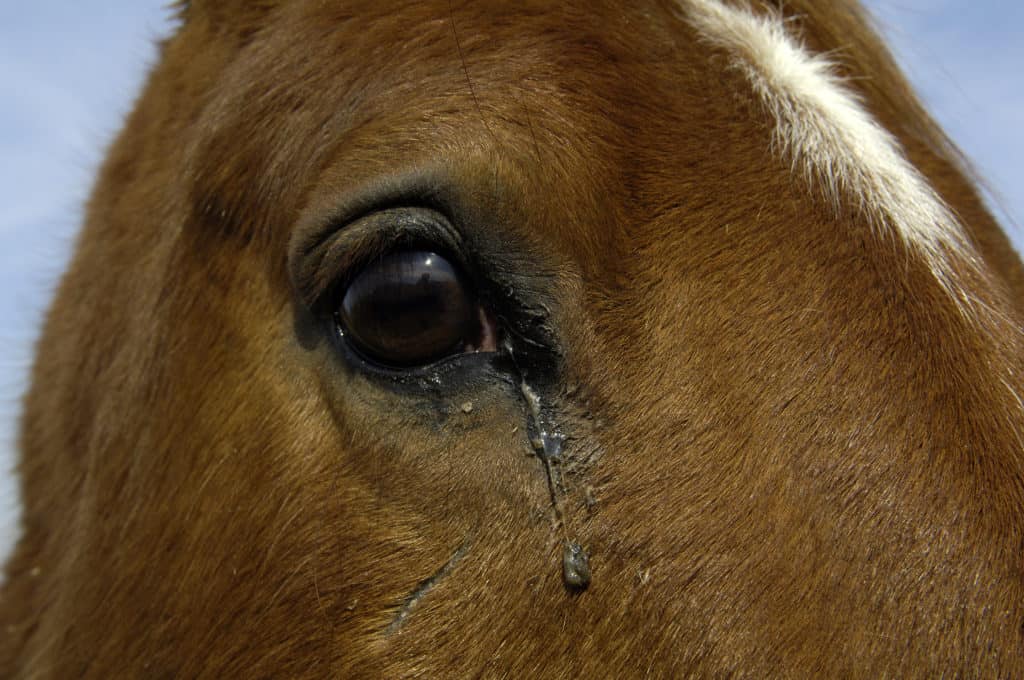
Dr. Claire Latimer of the Rood and Riddle Equine Hospital discusses veterinary ophthalmology, signs of eye problems, and treatment strategies.
Aside from routine dental conditions that occur in horses, owners might encounter a behavior that is referred to as cribbing or crib biting, which can have a negative effect on the incisor teeth.