Surgery for Triple-Level Spinal Cord Compression

Spinal cord compression in the neck, more technically known as cervical vertebral stenotic myelopathy or CVSM, can cause notable incoordination and affects about 2% of racing Thoroughbreds. Probably the most well-known horse affected by CVSM was

Read More

Anatomy and Physiology: Complete Series

Learn how your horse’s anatomy works with our complete anatomy and physiology guide, including basic terminology, skin, forelimbs, hindlimbs, feet/hooves, head and neck, tendons/ligaments, muscles, digestive, cardiovascular and reproductive systems.

Read More

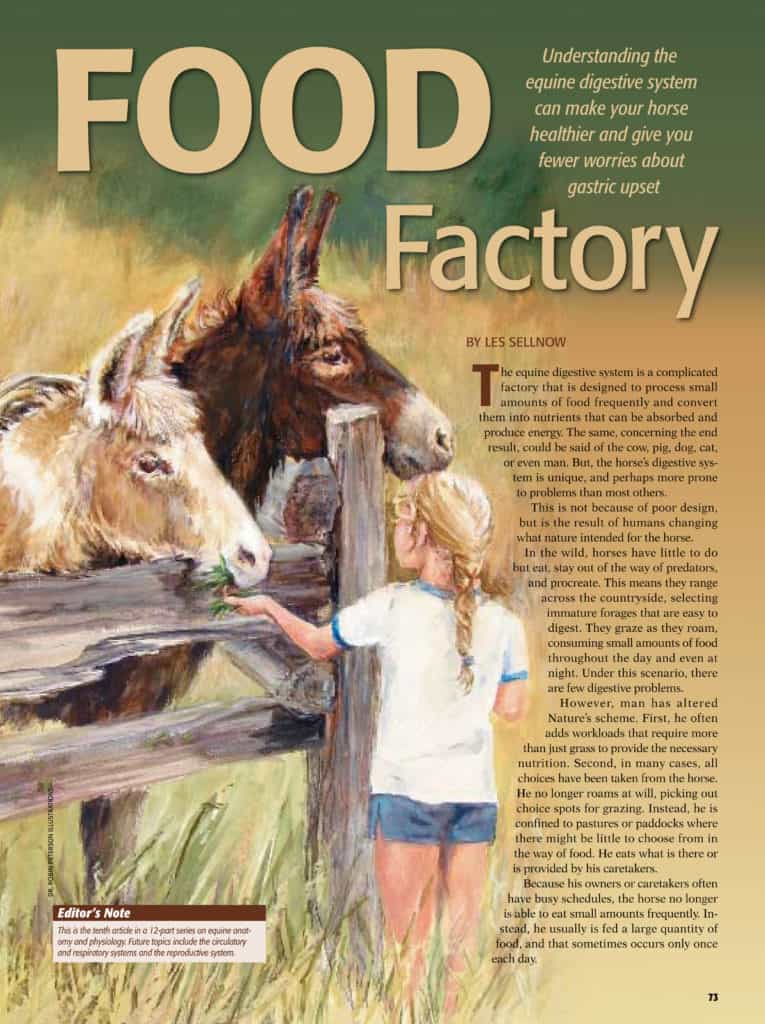
The Equine Digestive System: Food Factory

Understanding the equine digestive system can make your horse healthier and give you fewer worries about gastric upset. In this article, we’ll take a look at just how this “factory” is designed and how it functions.

Read More

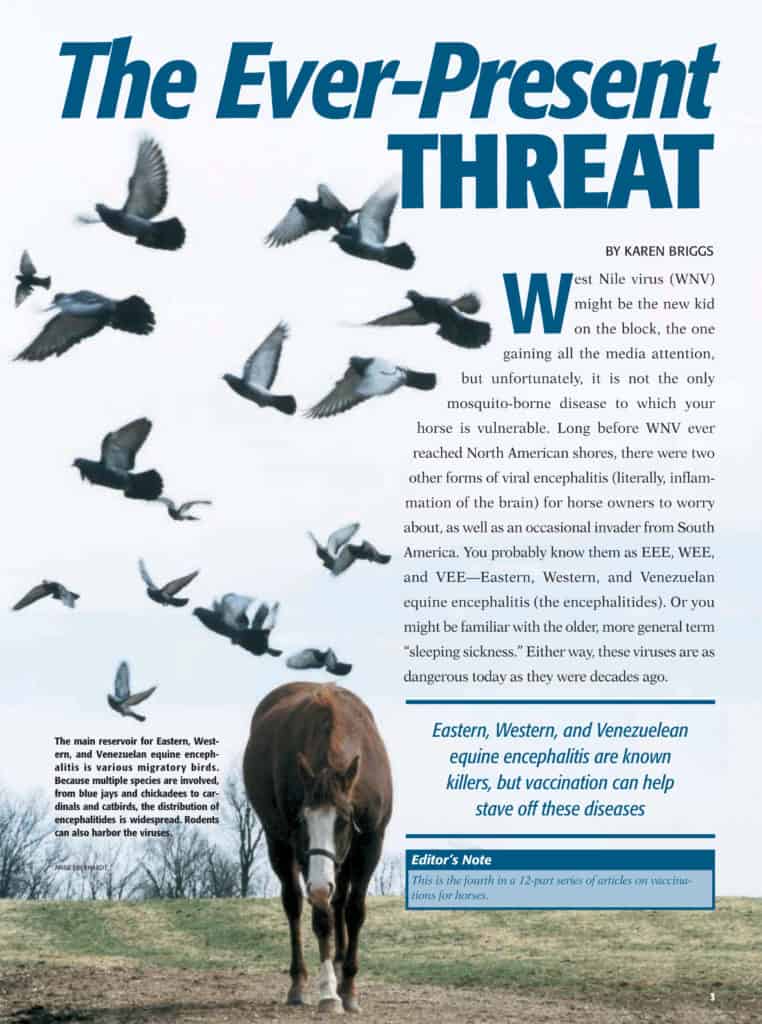
Equine Encephalitis:The Ever-Present Threat

Before WNV reached North American shores, there were two other forms of viral encephalitis for horse owners to worry about. Eastern, Western and Venezuelan equine encephalitis are killers, but vaccination can help stave off these neurologic diseases.

Read More

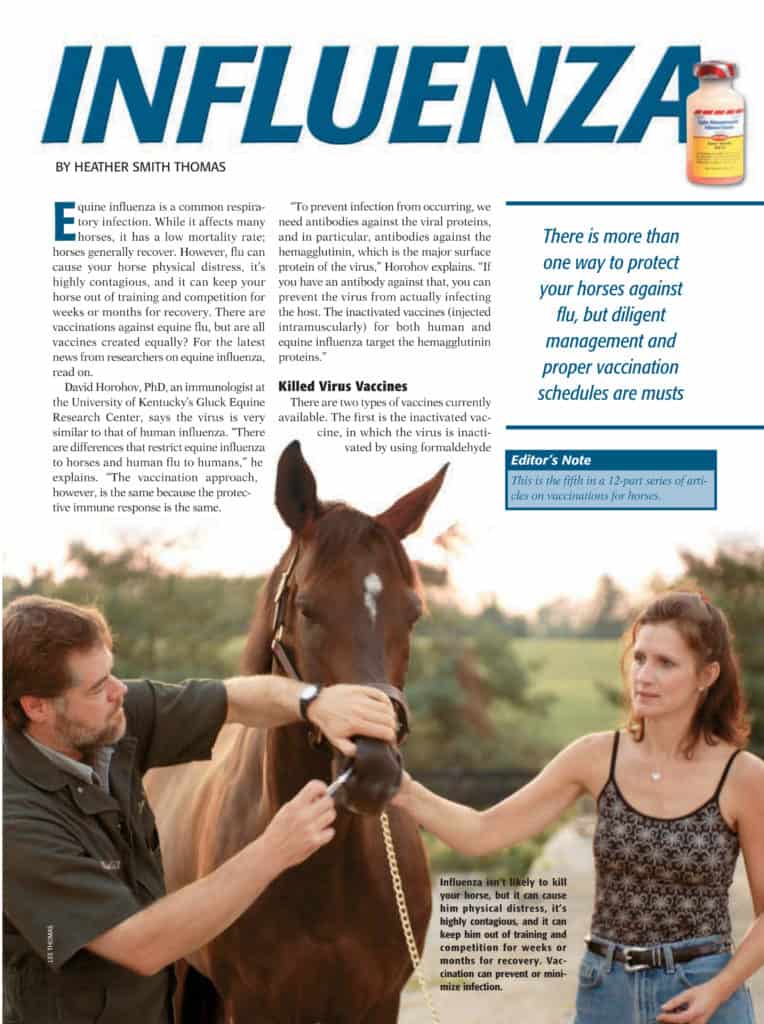
Influenza Vaccination

Equine influenza is a common respiratory infection. There are vaccinations against equine flu, but are all vaccines created equally? For the latest news from researchers on equine influenza, read on.

Read More

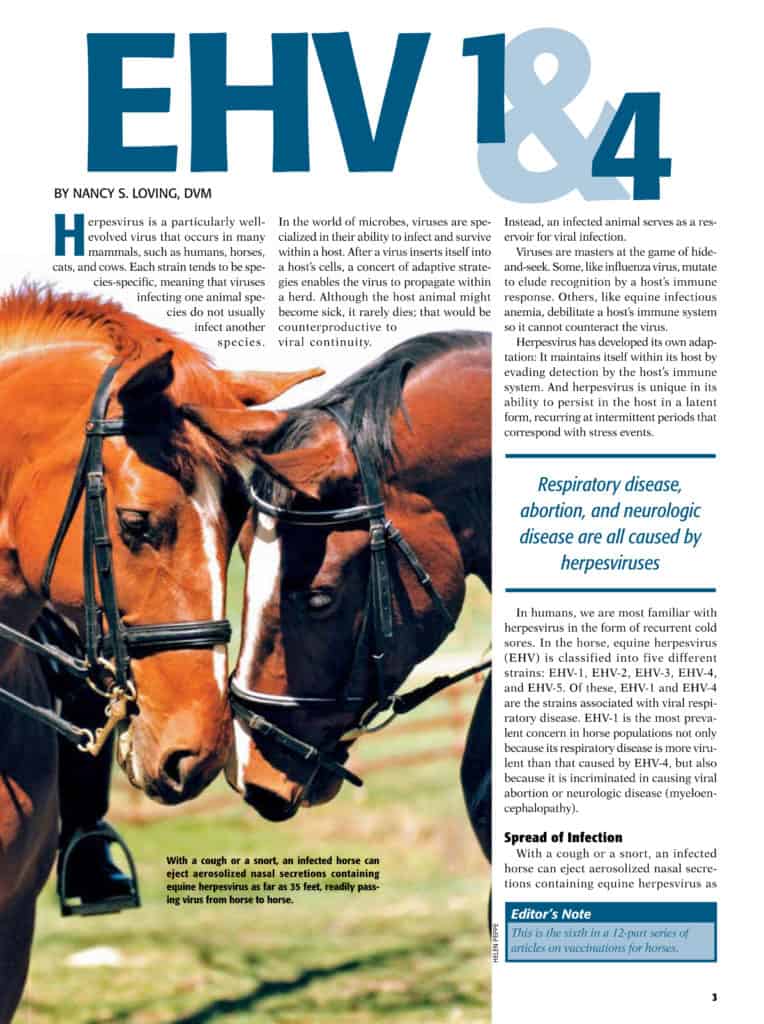
Equine Herpesvirus (EHV) 1 & 4

Respiratory disease, abortion, and neurologic disease in horses can all be caused by equine herpesviruses. EHV-1 and EHV-4 are the strains associated with viral respiratory disease, and EHV-1 can also cause neurologic disease…

Read More

Controlling Strangles in Horses

Strangles is a highly contagious disease that affects lymph nodes and potentially other organs in the horse. Researchers are working on effective vaccines, but management strategies are even more important in limiting its presence among horses.

Read More

New Zealand Tests Imports for Equine Flu

New Zealand biosecurity officials are retesting samples taken from horses imported directly from the United States to the Karaka quarantine facility due to conflicting test results that indicate the presence of equine influenza, the

Read More

Clearing Sand From the Gut

Sand colic due to an accumulation of sand in the intestines accounts for up to 30% of all colics, often causing weight loss and chronic diarrhea. Psyllium has often been recommended as a laxative for clearing sand out of the intestines, although

Read More

Australia Equine Flu Inquiry Wraps Up

Leaders of an inquiry into Australia’s billion-dollar equine influenza outbreak finished taking evidence Thursday after five months and testimony from 200 witnesses.

Former High Court judge Ian Callinan, who will issue his report by April 25,

Read More

Alfalfa Hay Reduces Ulcer Severity

If your horse has ulcers, giving him omeprazole isn’t the only thing you can do to help reduce the severity of the problem. Noah Cohen, VMD, PhD, MPH, Dipl. ACVIM, discussed a study that found alfalfa hay reduced the severity of ulcers in young,

Read More

EPM Treatment

To understand the best approach to treating equine protozoal myeloencephalitis (EPM), it is helpful to have a brief look at how the protozoa (single-celled parasites) that cause EPM–Sarcocystis neurona–enter the central nervous system.

Read More

EPM Prevention

How can you keep your horses safe from EPM?

The best way to keep your horses healthy is prevent them from getting sick. Sounds absurdly simple, right? In theory, this works. But in the real world of trying to protect horse

Read More

More From The Horse

pregnant chestnut mare standing in field
Pferd im herbstlichen Wald
hydroponic fodder system
Beautiful Arabian horse silhouette against morning sun shining through haze and trees

Stay on top of the most recent Horse Health news with

FREE weekly newsletters from TheHorse.com

Weekly Poll

sponsored by:

Create a free account with TheHorse.com!

The Horse
Privacy Overview

This website uses cookies so that we can provide you with the best user experience possible. Cookie information is stored in your browser and performs functions such as recognising you when you return to our website and helping our team to understand which sections of the website you find most interesting and useful.