Human Rehab Tools That Might Translate To Equine Athletes
A physical therapist and veterinarian discuss potential applications of blood-flow-restriction training, compression therapy, and more in horses.

A physical therapist and veterinarian discuss potential applications of blood-flow-restriction training, compression therapy, and more in horses.

To understand how horses fared during standing flank laparotomy for colic, researchers reviewed records from 37 equids. Here’s what they found.

To support workforce development, a University of Connecticut team seeks to understand which practical skills and knowledge are most useful for nonveterinarians in the equine rehabilitation industry.

Read about three real-life examples of equine athletes that made full recoveries from their injuries, including their diagnostic challenges, rehab modalities, and recovery details.
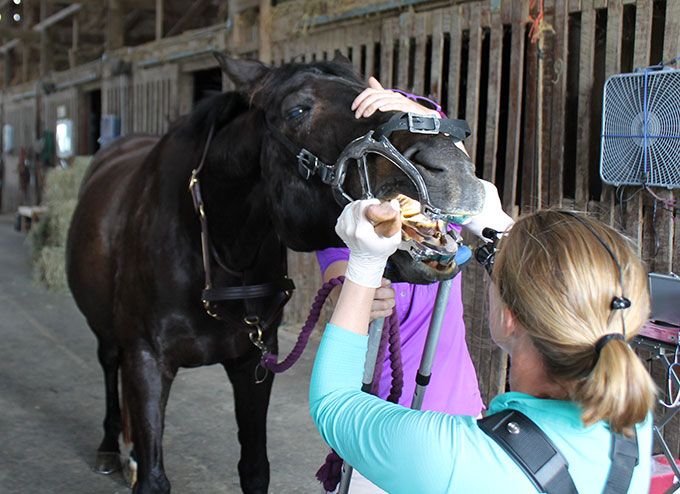
Modern options for equine sedation allow veterinarians to safely and thoroughly provide care for their patients during standing procedures such as dental exams and joint injections.

A veterinary anesthesiologist describes the steps he takes when caring for horses before, during, and after surgery.

Horses waking up from general anesthesia can injure themselves trying to stand. But those receiving epidural opioids beforehand generally make fewer efforts to stand and do so more calmly.

An expert lists four broad PT categories and describes the many techniques within each that can help horses recover from injury and improve their performance.

With a custom-made splint holding the bent knee in place and partially supporting the horse’s weight, equine surgeons can now perform needle arthroscopy in standing, sedated horses.

Learn about this therapy designed to provide support and stability to muscles and joints without restricting their range of motion.

The body delivers blood to help tendons heal. Power Doppler can identify when blood is present in horses’ injuries that veterinarians might otherwise believe to have recovered.

Sometimes rest is the best recipe for recovery for an injured horse. Learn about the science of healing, aggressive vs. conservative treatment, and exercise rehabilitation.

Standing surgeries on sedated horses can provide good, if not better, results than equivalent surgeries on fully anesthetized horses, without the added costs and complications.
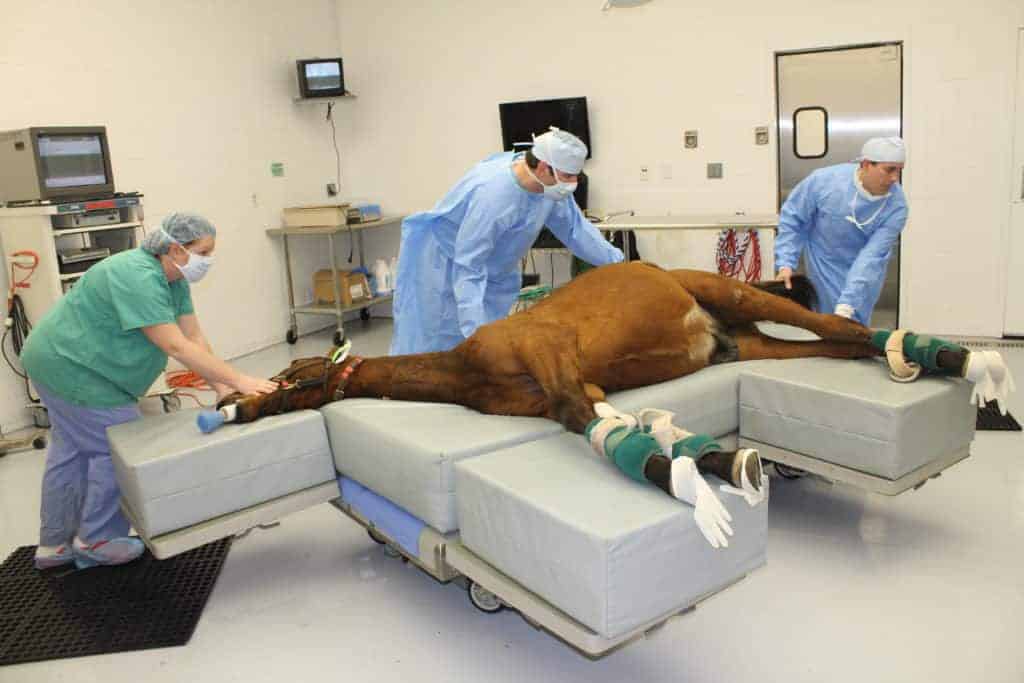
Horses undergoing general anesthesia die about a thousand times more often than humans do, at a rate of around 1 to 1.5 deaths per 100 anesthetized horses. Here’s a look at why.

A veterinarian dispels 4 common rumors that often sway an owner’s decision to pursue surgery for a colicking horse.

Using the natural antimicrobial prophylactically offers another line of defense against incisional infection in horses undergoing colic surgery.