Managing Equine Foot Pain
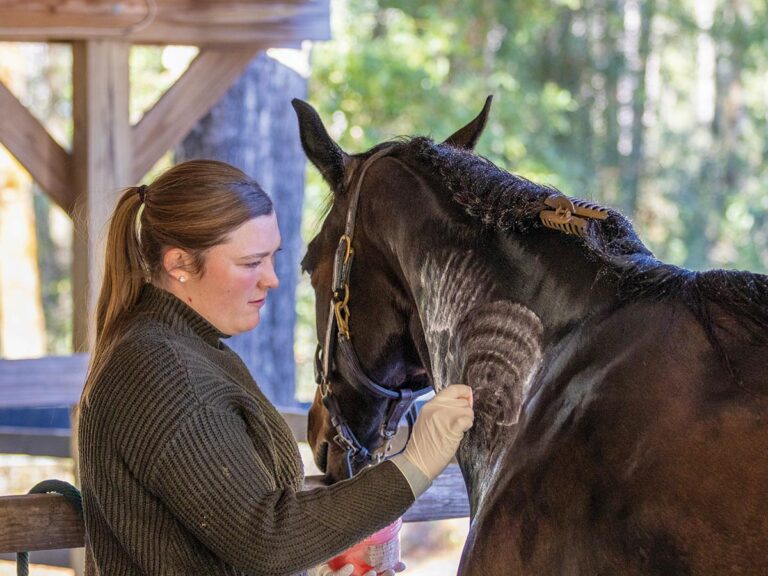
What can an owner do to control a horse’s foot pain? We turned to two equine veterinarians that spend a lot of time managing horses’ feet to find out.

What can an owner do to control a horse’s foot pain? We turned to two equine veterinarians that spend a lot of time managing horses’ feet to find out.
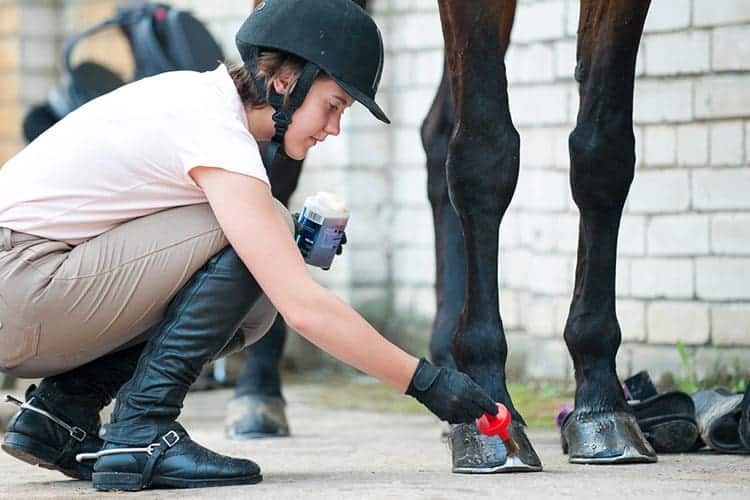
The Horse and Dechra have partnered to educate horse owners about hoof-related lamenesses Feb. 13-19, 2022.

Researchers found the choice of steroid used for sacroiliac joint injections predicted outcomes better than whether the horse underwent a preprocedure ultrasound.

In this visual guide, learn about the vital hoof structures of the navicular apparatus and what can go wrong with them.

Researchers found sound horses’ movement didn’t change when traveling on straight, flat surfaces after undergoing foot nerve blocks.

To better understand the piaffe and its effects on a horse’s biomechanics, researchers investigate the ground reaction forces of elite dressage horses performing the movement over pressure plates.

Researchers found horses on regular four- to six-week trim and shoe cycles didn’t have significant gait changes after their hoof care appointments, even on a finely measured level.

MRI has helped veterinarians recognize new pathologies within horses’ hooves as well as learn more about existing lesions.

Any athlete can end up with aches and pains from the rigors of training and performance, and horses are no exception. Sponsored by Arthramid Vet.

Diagnostic imaging technology has improved tremendously in the past few decades, with several effective options to choose from. Learn about the machines and technologies your veterinarian can use to look inside your horse, including MRI, CT, PET scans, and more.

Use this visual guide to learn about the technologies your veterinarian might use to look inside your horse and why.
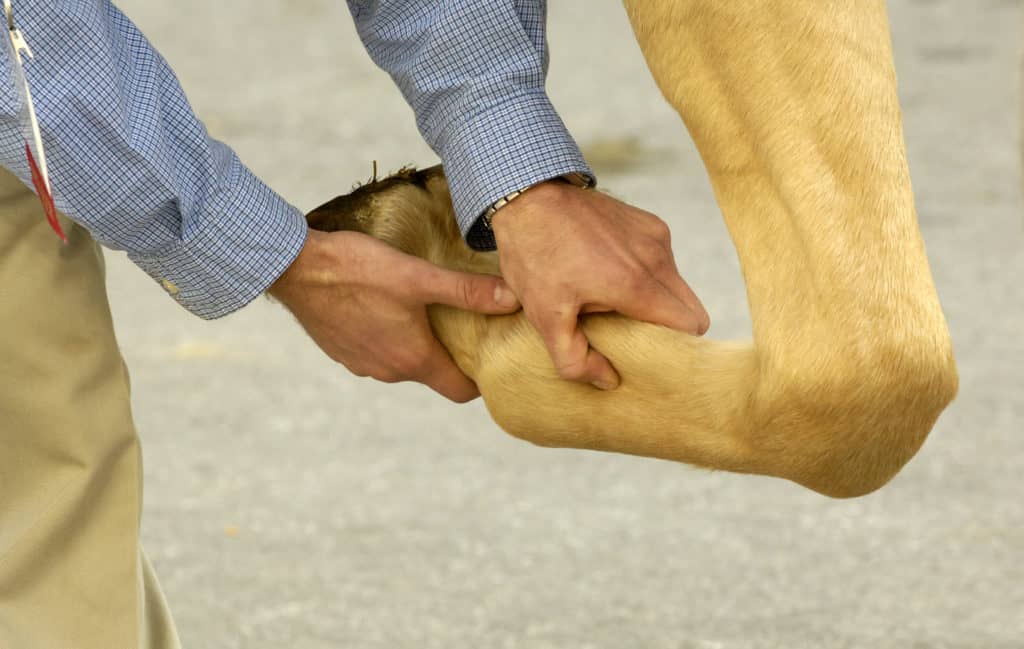
The editors of The Horse: Your Guide To Equine Health Care have scoured our archives and gathered our top lower limb lameness content. Sponsored by Hallmarq Veterinary Imaging.

In the four months since the MILEPET scanner’s installation at UC Davis Veterinary Hospital, veterinarians have imaged 100 horses; more than half were performance and pleasure horses.

Computed tomography (CT) and magnetic resonance imaging (MRI) are two diagnostic imaging methods veterinarians can use to capture images of structures within your horse’s body. Learn more in this visual guide!
The UC Davis standing equine PET scanner provides imaging at the molecular level to monitor racehorse health and guide training and medical care.

Researchers found that horses 25 years and older are more likely to suffer chronic laminitis even if they aren’t showing obvious clinical signs of disease.