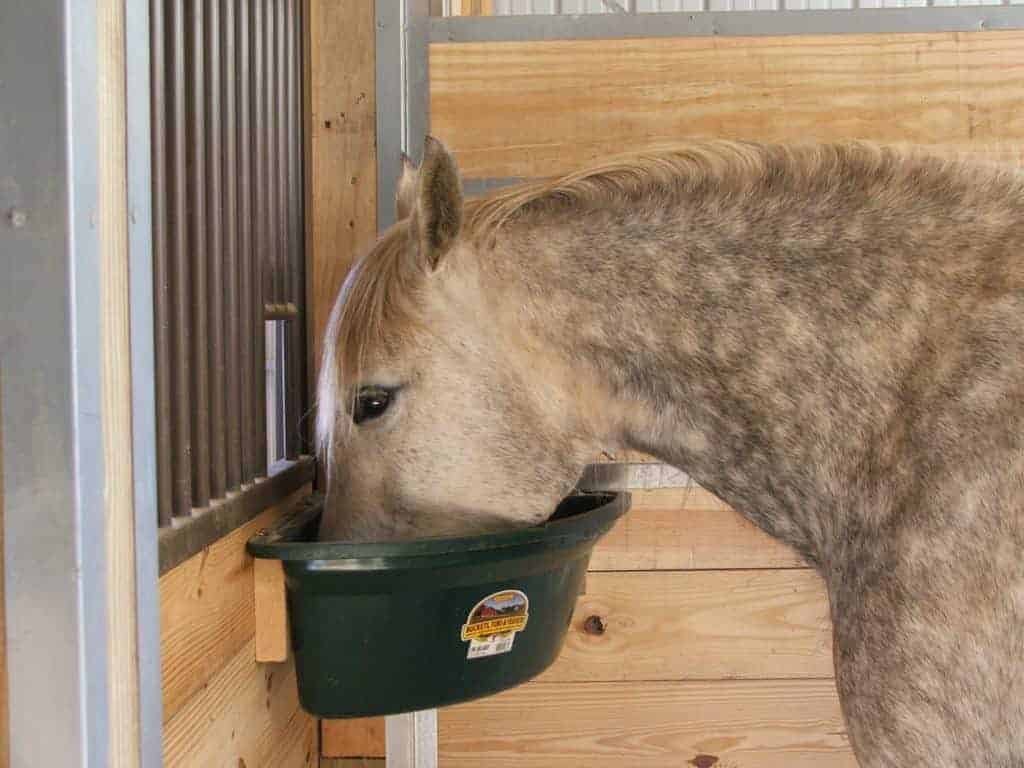
Tips for Feeding Horses With Wheat and Corn Allergies
Learn about feed allergies in horses—including allergy testing—and what you can do to make sure your allergic horse gets the nutrition he needs.

Learn about feed allergies in horses—including allergy testing—and what you can do to make sure your allergic horse gets the nutrition he needs.
A senior gelding is urinating more frequently after alfalfa got added to his diet. Here are the possible reasons.

Our nutritionist helps resolve a debate between friends about whether a horse with poor hoof quality would benefit from a hoof supplement or a properly portioned ration balancer.

Is your horse’s annual wellness exam comprehensive? Learn about common wellness steps and how your veterinarian can help you address and correct problems you might encounter.

An equine nutritionist addresses the different types of salt available and how to pick the right one.

British researchers watched horses feeding in groups to find out if dominance is linked to weight gain. What they found might surprise you.

Grain or hay: Which is better to keep horses from losing weight during winter?

Dietary deficiency of vitamin E can lead to three specific neurologic and muscular diseases. Find out if your horse is getting enough.

Is your horse a picky eater? Learn about reasons your horse might turn his nose up at his meals and what you can do about it.

Rats and mice spread disease and ruin horse feed. Learn how to reduce populations in your barn.

An equine nutritionist explains the difference between international units (IU) and milligrams (mg) and how to make sure your horse is getting enough vitamin E.

Dr. Laurie Lawrence of the University of Kentucky describes recent equine nutrition research from her lab, from deciphering forage composition to monitoring obesity. She also shares common misconceptions about feeding horses.

Ditching dry hay in favor of cleaner forage options improved racehorse airway inflammation.

Does your horse need a dollop, dab, pinch, or peck? Learn to formulate a diet based on your horse’s age, body condition, and health status.

Researchers say progressive changes in diets lead to healthier microbiomes and fewer digestive issues, such as diarrhea and colic.
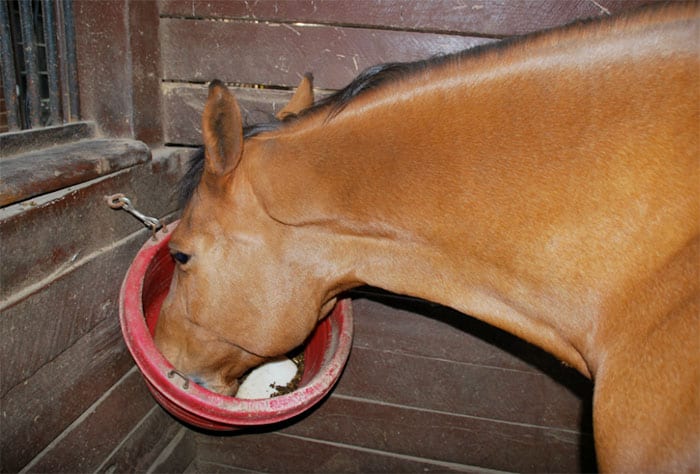
Showing, training, traveling, or even lifestyle changes can put your horse under stress that risks his health. The right nutritional choices can support his immune system, GI tract, and overall well-being. Learn how.