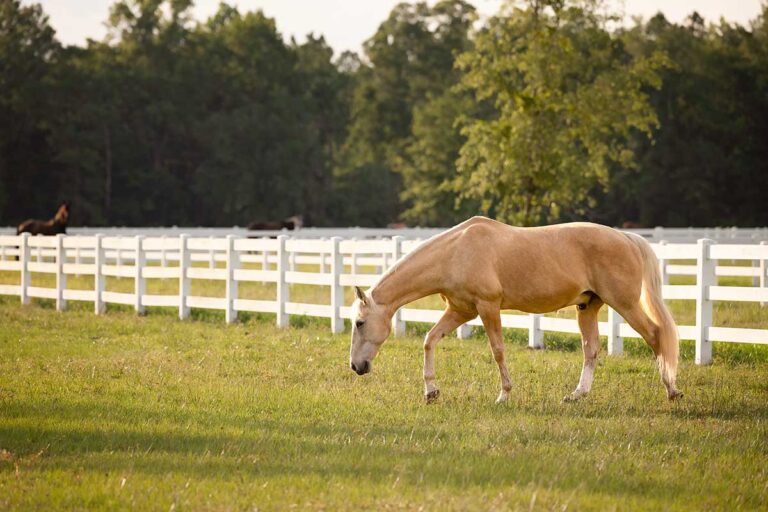
The Drylot Life
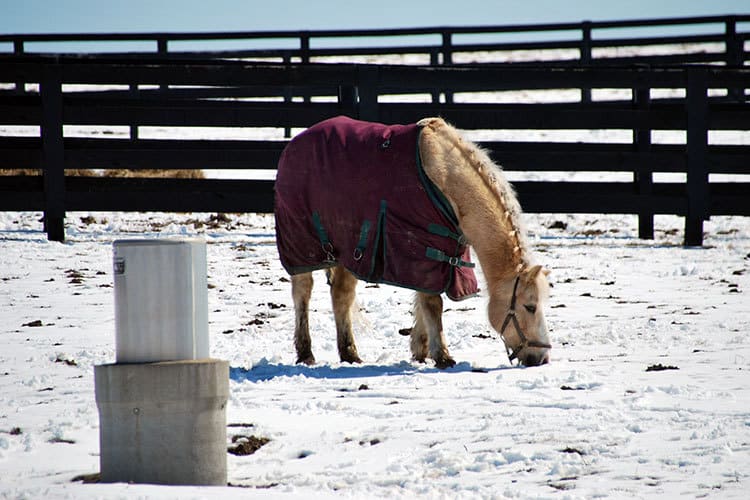
Not every owner has access to pasture for their horses. Download this free report to learn more about drylots and special considerations for housing horses in pastureless regions.
Horse-health-problem risk factors, prevention, diagnosis, and treatment

Not every owner has access to pasture for their horses. Download this free report to learn more about drylots and special considerations for housing horses in pastureless regions.

To boot, researchers found that it’s not always easy for owners to spot ocular issues: Owners reported that fewer than 4% of the study horses had some sort of ocular disease, but researchers determined that nearly 90% of them did.

Researchers tested a sulfadiazine and trimethoprim suspension specifically designed for oral administration with positive results.

An 8-year-old Saddlebred mare from Loudon County and a 7-year-old Tennessee Walking Horse from Monroe County tested positive for WNV.

A user in a wildfire-affected area asks if supplements can help support her horse’s respiratory system.

After several pox outbreaks in horses and donkeys in Brazil, researchers are still working to understand how the equids got the vaccinia virus, why humans don’t seem to get it from equids, and why some equids get it in a population and others don’t.

Parul Suri’s research is mainly focused on Sarcocystis neurona, a parasite that can cause EPM in horses.

While wire ingestion was once considered a death sentence, researchers recently found that surgery can save some affected horses, especially if the foreign body is identified and treated early.

Officials confirmed three EIA cases in horses from Kaufman, Tarrant, and Tom Green counties.

This is the fourth confirmed case of WNV in North Carolina horses in 2018.

Vitamin E deficiencies can cause neurologic and other health problems in horses. As such, at-risk horses—from breeding stock and foals to equine athletes and pasture pets—might benefit from supplementation.

The unvaccinated 7-year-old Percheron gelding presented with hind-limb ataxia and muscle fasciculation but has a favorable prognosis for recovery.

Equine recurrent uveitis (ERU) is an incurable and painful eye condition that can result in vision loss and reduce affected horses’ function and value. Here’s a look at the latest research and findings on this frustrating condition.

The two new cases—confirmed in a donkey from Medina County and a Belgian mare from Wyandot County—bring Ohio’s case-count total to 50 so far this year.

The unvaccinated horse in Davie County is the fourth North Carolina horse to test positive for WNV this year.

A yearling Grade filly with unknown vaccination history began displaying neurologic signs. She tested positive for WNV and was euthanized.
Stay on top of the most recent Horse Health news with
"*" indicates required fields