Small But Mighty: Caring for Ponies
Learn what makes managing ponies special—from their critical need for nutritional supervision to their often feisty personalities.

Learn what makes managing ponies special—from their critical need for nutritional supervision to their often feisty personalities.

Dr. Weston Warnock shares his clinical experience using orthobiologics to help manage horses with foot pain.

Belgian researchers use both modalities to investigate the causes of foot pain in 30 horses referred to the equine hospital for forelimb lameness.

What can an owner do to control a horse’s foot pain? We turned to two equine veterinarians that spend a lot of time managing horses’ feet to find out.

The average horse is more likely to encounter a foot bruise than any other lameness. If you recognize the causes of foot bruises and understand their treatment and prevention, you can stave off discomfort in your horse and perhaps avoid an abscess.
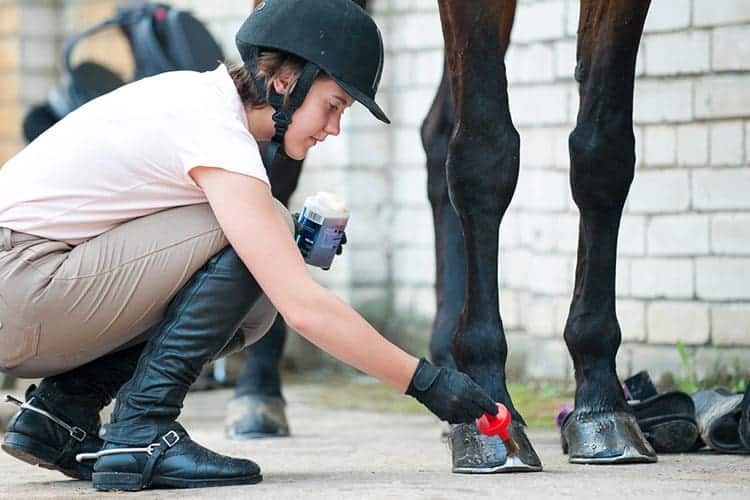
The Horse and Dechra have partnered to educate horse owners about hoof-related lamenesses Feb. 13-19, 2022.
A good thrush prevention plan includes proper hoof care, regular exercise, and a clean living environment.

In this visual guide, learn about the vital hoof structures of the navicular apparatus and what can go wrong with them.

Though it goes by several names, the condition is common among horses and frustrating for owners, farriers, and veterinarians alike.
Look for educational information about navicular syndrome, or podotrochlosis, all week long, Jan. 16-22, 2022.

Snow and ice during winter can cause footing problems for horses, especially those called upon to do something other than loaf in the pasture or paddock.

From growing a thick winter coat to producing heat as they digest forage, here’s how horses are inherently designed to cope with cold weather.

Dr. Vern Dryden talks about why horses with laminitis might be more prone to hoof abscesses.

Dr. Vern Dryden shares what horse owners and veterinarians can do to relieve a horse’s pain during a laminitic episode.

Researchers found horses on regular four- to six-week trim and shoe cycles didn’t have significant gait changes after their hoof care appointments, even on a finely measured level.

Can a horse have low-grade laminitis for several months without being detected by your farrier? Dr. Vern Dryden answers.